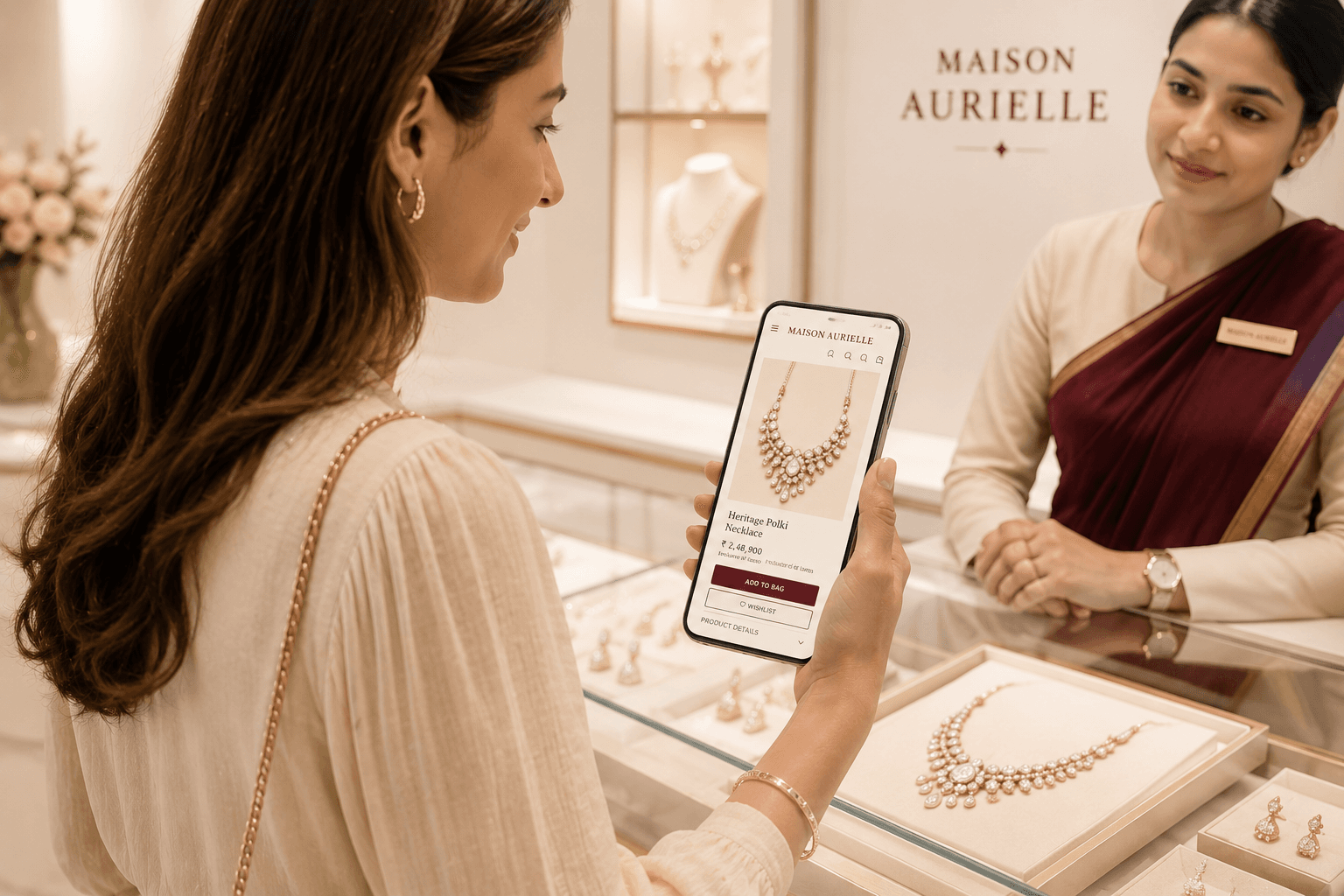
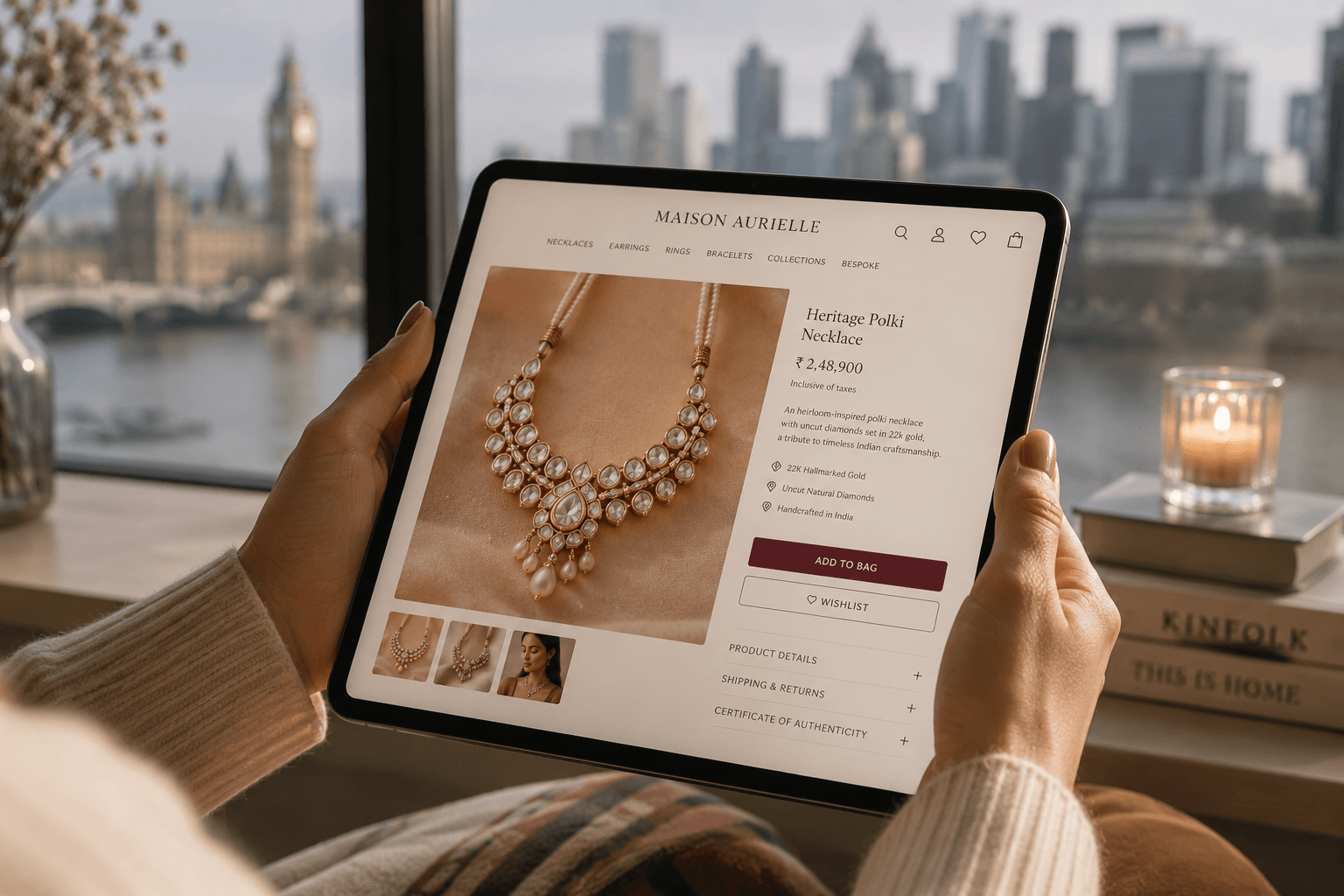
The local buyer comes in for price, variety and choice. The NRI buyer wants something else first: trust, clarity, and the certainty that a large purchase made from thousands of kilometres away will actually arrive, be real, and be handled properly. Get that right and you unlock a segment most jewellers barely touch. Get it wrong, or stay silent on it, and they never order.
Why the NRI buyer is different, and more valuable
They tend to spend more. NRI buyers often purchase for weddings, gifting and major occasions, at higher basket sizes than everyday local buying. They’re also relatively insulated from the thing squeezing your local market: when rupee gold prices hit records, the buyer earning in dollars or dirhams feels it far less. So while high gold prices cool local demand, the NRI buyer often keeps buying, which makes them more valuable in exactly the moments your local business softens.
And many of them want to buy from an Indian jeweller specifically. It’s a connection to home, to tradition, to the kind of pieces they can’t easily get abroad. The demand is there. The question is whether your website earns it.
For the NRI buyer, your website isn’t part of the decision. It is the decision.
Your local customer researches online, but can also walk in, touch the piece, meet you, and let your in-person reputation close the sale. The NRI buyer can do none of that. They can’t visit your showroom. They can’t hold the piece. They can’t read your face across the counter. Every bit of trust, every answer, every reassurance they need has to come from your website, because it’s the only thing they can actually reach.
So for this buyer, the website isn’t a step in the decision. It’s the whole decision. If it doesn’t build trust, answer their worries, and make ordering from abroad feel safe, there’s no showroom visit to save the sale. There’s just a closed tab.
What the NRI buyer actually worries about
The local buyer rarely thinks about any of this. The NRI buyer thinks about little else, and silence on any single one of these loses them.
Will it actually arrive?
They want to know how it ships, how it’s insured, and how they can track it the whole way.
What about duties and taxes?
A clear total landed cost, so there’s no nasty surprise waiting at customs.
Is the transaction safe?
Cross-border payment they trust, with no fear of fraud paying a jeweller in another country.
Is it genuine?
Certification and hallmarking doing the reassuring that touch and trust would do in person.
Answer these clearly and visibly and you remove the reasons not to buy. Leave them unanswered and the buyer, sensibly, doesn’t risk it.
The markets don’t all buy the same way
Here’s a subtlety that trips up even jewellers who do target NRIs: “NRI” isn’t one market. A buyer in the US shops differently from a buyer in the UAE, who shops differently again from your domestic customer.
US buyers
Often want to design it themselves
- Real-time builders and customisation
- Create the piece, then see it
- Respond to studio-style tools
Indian & many NRI buyers
Usually want strong curated options
- Well-chosen collections to pick from
- Guidance over endless configuration
- Curation that does the deciding
Every NRI market leans hardest on trust, clarity and tracking, first.
A jeweller in Kolkata targeting US buyers had built a straightforward catalogue with generic options, never realising their American customers wanted to design the piece themselves rather than pick from a list. The demand was there; the experience was built for the wrong market. We rebuilt it around a proper builder flow that let those buyers create and see their piece, and it changed how the site performed.
Selling to NRIs isn’t translation. It’s fluency in how that specific market actually buys.
What an NRI-ready website looks like
Put it together and an NRI-ready jewellery website does a handful of specific things a domestic-only site doesn’t.
- Multi-currency pricing the buyer understands
- Clear duties, taxes and total landed cost
- Cross-border payment methods the buyer trusts
- Shipping, insurance and tracking shown plainly
- Trust signals: certification and hallmarking, front and centre
- Built around how the target market actually buys
None of this is exotic. It’s just built for the buyer who can only ever meet you through a screen. Do it, and you reach some of the highest-value demand available to an Indian jeweller, demand that the local price squeeze doesn’t touch, and that most of your competitors are quietly ignoring.
Frequently asked questions
How do NRI buyers shop for jewellery differently from local buyers?
Local buyers come for price, variety, and choice, and can visit a store to build trust in person. NRI buyers can’t visit, so they buy on trust, clarity, and certainty first: they want to know a large purchase made from abroad will arrive safely, clear customs cleanly, and be genuine, before they’ll order.
Why is a website so important for selling jewellery to NRIs?
Because it’s the only thing they can reach. An NRI buyer can’t walk into the showroom, hold the piece, or meet the jeweller, so every bit of trust and reassurance has to come from the website. For this buyer, the site isn’t part of the decision: it is the decision.
What do NRI jewellery buyers worry about most?
Whether the piece will actually arrive and be insured and trackable, what duties and taxes they’ll pay, whether the transaction is safe, and whether the piece is genuine. Clear answers to each of these, shown on the website, remove the main reasons an NRI buyer hesitates.
Do US and UAE jewellery buyers want the same thing?
Not exactly. US buyers often want to design their own piece, responding to real-time builders and customisation, while Indian and many NRI buyers prefer strong curated options. All lean heavily on trust and clarity. Building for the wrong instinct can make even a good site underperform.
What features does a jewellery website need to serve NRI buyers?
Multi-currency pricing, clarity on duties and total landed cost, trusted cross-border payment, visible shipping, insurance and tracking, strong trust signals like certification and hallmarking, and an experience built around how the target market actually buys. Together these make ordering from abroad feel safe.