If you run a jewellery business, you’ve felt it: buyers hesitating, deals getting smaller, the middle-class customer thinking twice. It was the second-weakest start to a year since 2000. But the full picture is more interesting than “prices up, demand down,” and it points to what a jeweller can actually do about it.
Note: figures reflect early-2026 data and will move as the year develops. This is context for jewellers, not investment advice.
Jewellery spending hit a record in the same quarter, up sharply year-on-year. Buyers didn’t stop buying. They changed how they buy. And the jewellers adapting to that shift are growing, while the ones waiting for gold to come back down are the ones hurting. As people who build the digital side of jewellery businesses, what we can do is show you what the data says, and where the opportunity is.
What’s really happening to jewellery demand
Three shifts are happening at once, and understanding them is the whole game.
Buyers are trading down in weight, not walking away. When gold gets expensive, the ₹2 lakh heavy necklace becomes a ₹2 lakh lighter necklace, or a studded piece where the diamonds carry the value and the gold content is smaller. The customer still wants to buy. They just want more design and less metal for their money. Spending held up; grams went down.
Gold is becoming an investment, not just an ornament. For the first time on record, Indians bought more gold as investment (bars, coins, ETFs) than as jewellery in early 2026. That sounds like bad news, but it’s really a signal: the customer’s relationship with gold is changing, and the pieces that sell now are the ones that feel like design and emotion, not just stored weight.
The value is shifting from the metal to everything around it. When gold itself is this expensive, your margin and your differentiation increasingly live in making, design, studded work, certification, and experience, not in the raw metal, which every jeweller prices off the same rate anyway.
Put simply: the heavy-gold, weight-led business is under pressure. The design-led, studded, lighter, experience-led business is where the buyers are going.
Why some jewellers are growing through this
While volumes fell industry-wide, the jewellers who adapted didn’t just survive: many grew strongly. Listed retailers reported revenue growth well into double digits through the same period. And the sharpest growth of all showed up in one place: online.
Some jewellery businesses reported their e-commerce and digital channels growing over 100% year-on-year while gold sat at record highs. That’s not a coincidence. When buyers are cautious and price-sensitive, they research more, compare more, and decide more carefully, and almost all of that happens online, before they ever walk into a store. The jewellers capturing that research phase are winning the sale. The ones invisible online are losing it without ever knowing.
High gold prices didn’t shrink the opportunity. They moved it, toward design and trust, and toward the digital channel where cautious buyers now make up their minds.
What a jeweller can actually do about it
You can’t control the gold rate. You can control almost everything else. Here’s where the leverage actually is.
Lead with studded, lighter, design-led pieces
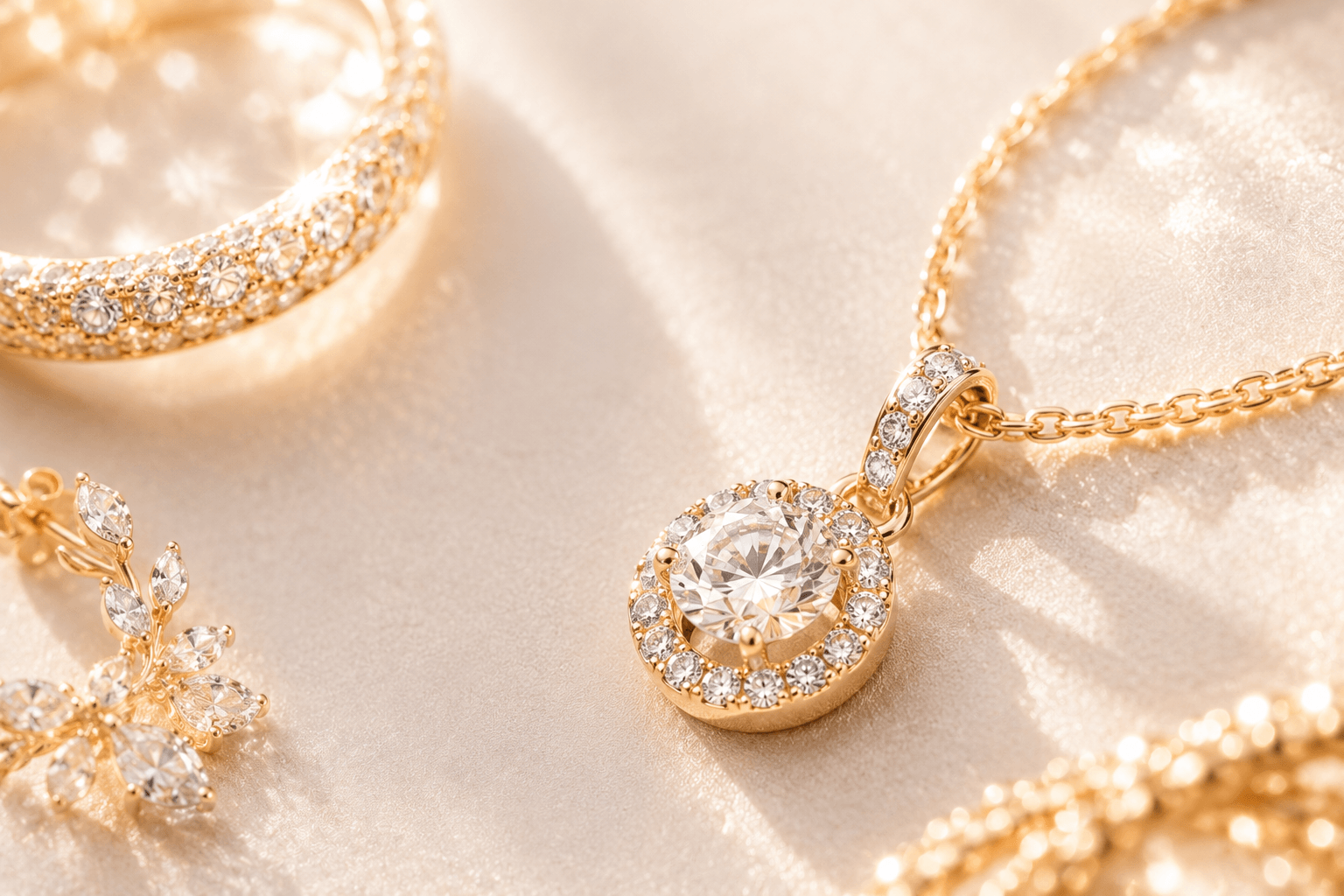
Your online presence should push the pieces that win when gold is expensive: diamond and studded work where value comes from design, lighter everyday pieces, customisable options. If your storefront still leads with heavy-gold weight, it’s built for a market that’s contracting.
Win the research phase
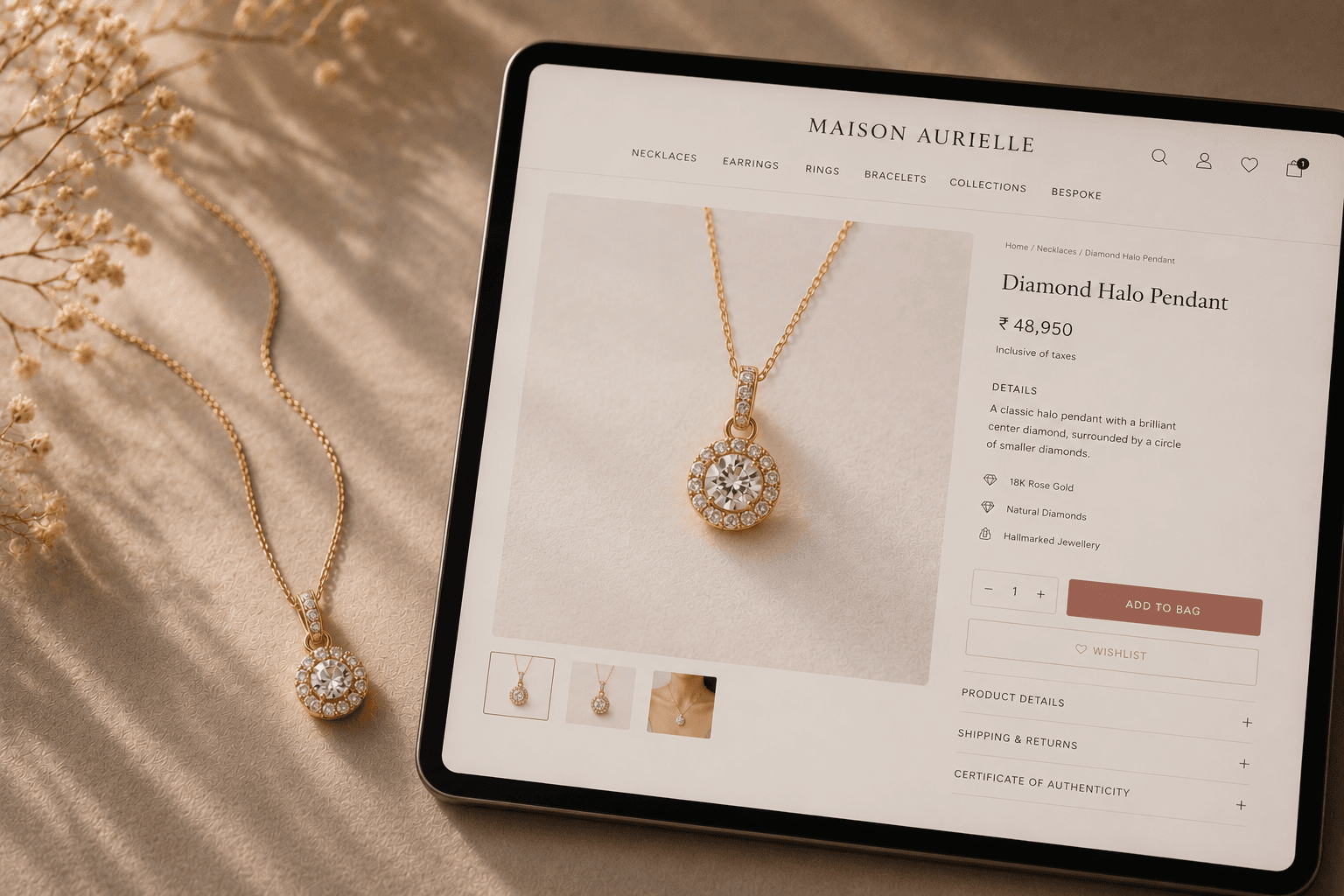
Cautious buyers research harder. A website that shows pieces clearly, explains value honestly, displays certification, and builds trust turns an online researcher into an in-store buyer. Most purchases still close offline, but they’re increasingly decided online. If your site doesn’t win that moment, a competitor’s does.
Grow value per customer, not just footfall
When each customer is more cautious, the businesses that thrive lift conversion, average order value, and repeat purchase. That’s a job your website and digital experience do directly: better presentation, easier decisions, smoother buying, follow-up that brings people back.
Make certification and transparency visible
In a price-sensitive, investment-minded market, buyers want proof of what they’re getting. Clear certification, hallmarking, and honest pricing aren’t just trust signals, they’re conversion tools when the buyer is being careful with money.
Capture the buyers gold prices don’t scare
NRI and higher-end buyers are far less deterred by rupee gold prices, and they’re some of the highest-value customers a jeweller can have. A website built to serve them, with clarity, trust, and cross-border capability, reaches demand the local price squeeze doesn’t touch.
None of this requires waiting for gold to fall. It requires meeting the market where it’s actually going.
The honest bottom line
High gold prices are painful, and the volume drop is real. But the data is clear that this is a shift, not a collapse. Buyers are spending more, on lighter and more considered pieces, and deciding more of it online. The jewellers struggling are mostly the ones still built for the old pattern: heavy gold, weight-led, offline-only. The ones growing have adapted their mix and, above all, their digital presence.
The gold rate is out of your hands. How well your business is positioned for the way buyers actually shop now is entirely in them. (If that shift means a new build, here’s what a jewellery website costs.)
Frequently asked questions
Are high gold prices reducing jewellery sales in India?
In volume terms, yes: jewellery volumes fell around 19% year-on-year in early 2026 as record prices hit affordability. But spending actually rose to a record in the same period, because buyers shifted to lighter and studded pieces rather than stopping. Demand moved; it didn’t disappear.
What should jewellers sell when gold is expensive?
Design-led, studded, and lighter pieces tend to perform best, because their value comes from craftsmanship and stones rather than raw gold weight. Customisable and everyday pieces also hold up well. Heavy, weight-led gold is where the pressure is heaviest.
Can a website help a jewellery business when gold prices are high?
Yes, and the data supports it: while overall jewellery volumes fell, digital channels grew sharply, with some jewellers reporting over 100% online revenue growth. Price-sensitive buyers research more before buying, mostly online, so a strong website helps capture the sale whether it closes online or in-store.
Why did gold investment demand overtake jewellery demand in 2026?
As prices rose, more buyers treated gold as a financial asset, buying bars, coins, and ETFs, while jewellery buying became more measured. For the first time on record, investment demand exceeded jewellery demand in early 2026, a signal that the pieces which now sell are those offering design and emotion, not just stored weight.
Is it worth investing in a jewellery website during a demand slowdown?
Often it’s the best time, because cautious buyers research harder and the online channel is where they decide. Businesses that capture that research phase tend to grow share even in a soft market, while those invisible online lose sales they never see.