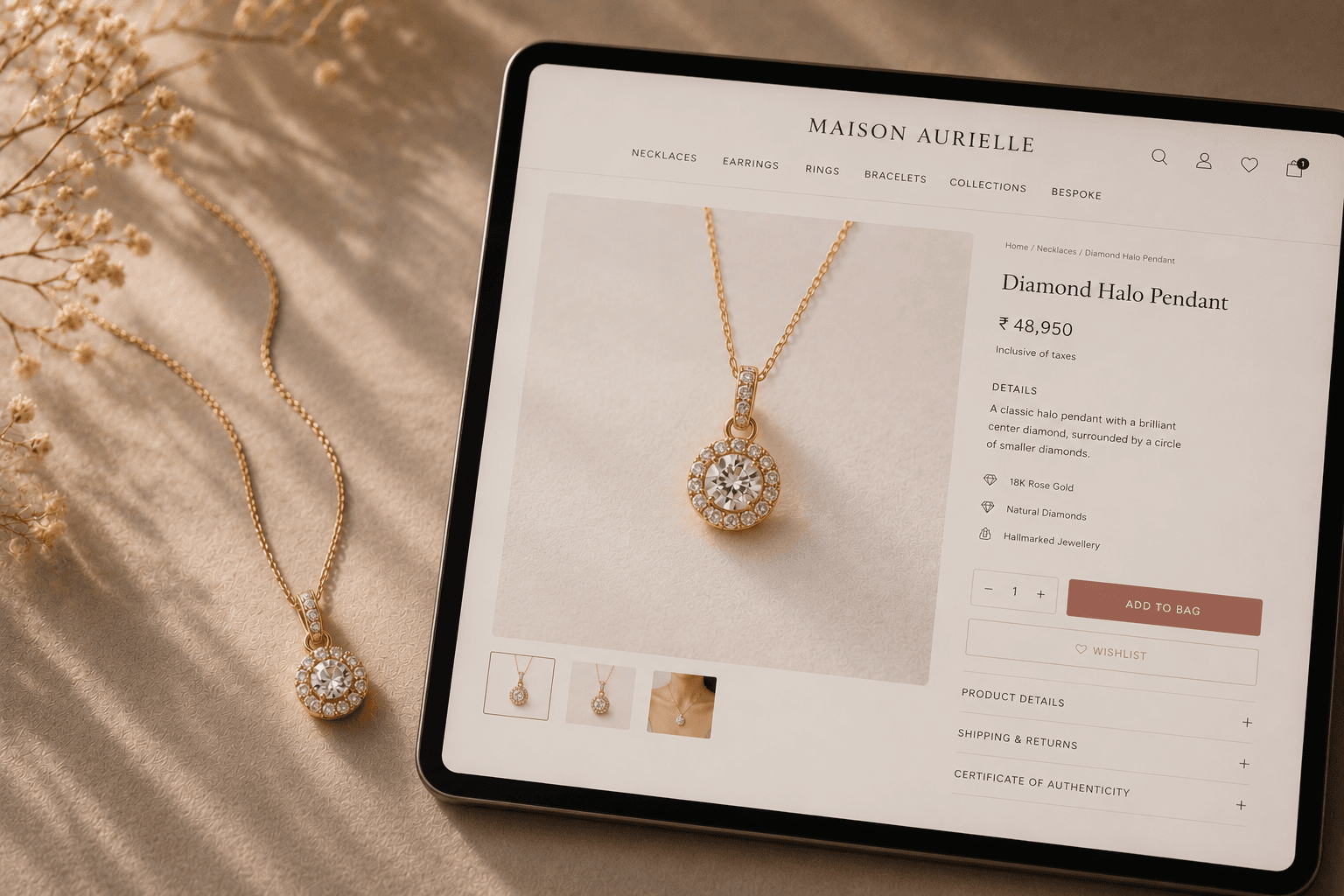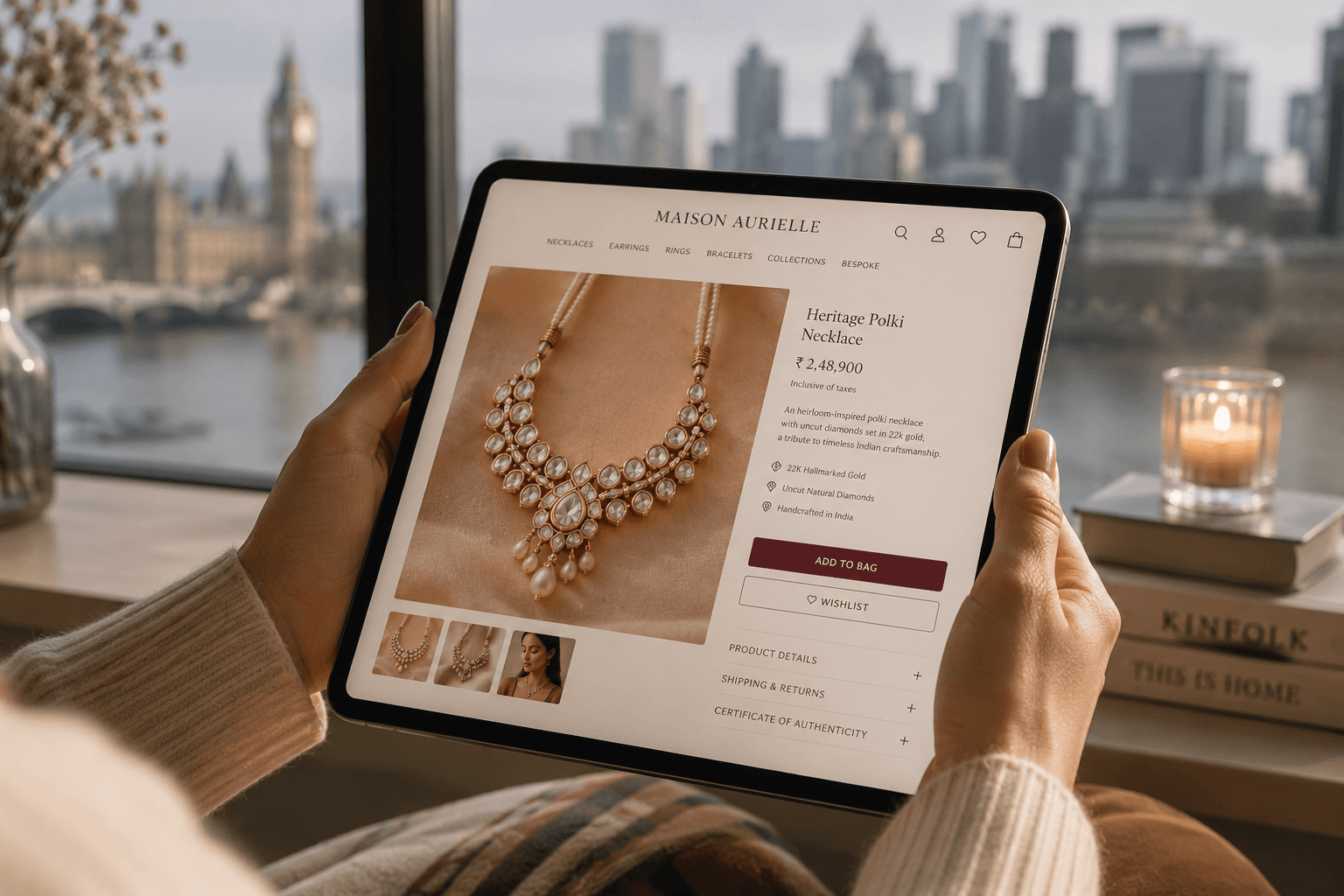
A US-based jeweller was already offering customisation on their website, and it wasn’t working the way it should. Buyers could configure a piece, but they couldn’t really see what they were making. We rebuilt the experience into a real-time design builder that showed the piece as it was created, and engagement rose 57% in 60 days. The jewellery didn’t change. The ability to see it did.
The problem
Their existing customiser was a basic three-step picker: choose a stone, choose a setting, choose a metal. Functionally, it worked. You could make selections and reach an end. But it asked the buyer to make a series of choices without ever showing them the result. You picked a stone, picked a setting, picked a metal, and had to imagine how it all came together. For a high-value, personal purchase, that’s a lot to ask.
And unsurprisingly, plenty of buyers configured a piece and then didn’t go through with it, because they couldn’t picture what they’d actually get. The options were there. The confidence to buy wasn’t, because the seeing wasn’t.
Why most online customisation fails
This is the trap almost every online jewellery customiser falls into. The changes the buyer makes don’t show up visually. You swap a stone or a metal and the picture either doesn’t update or was never really there to begin with. And without seeing it, the buyer can’t commit.
Jewellery is emotional and personal, especially a custom piece. People need to see the thing, react to it, adjust it, and feel “yes, that’s the one” before they’ll spend. A customiser that hides the result behind a list of dropdowns removes exactly the moment that makes someone want to buy.
A three-step picker
Choices, no result
- Pick a stone, a setting, a metal
- Never see how it comes together
- Commit to something unseen
- Configure, then don’t buy
A real-time builder
See it as you make it
- The piece updates as you change it
- Metal, stone, band, engraving, all visible
- Respects what can actually be made
- Design, then buy with confidence
The hidden complexity
The difficulty isn’t only the rendering. It’s the rules underneath it. Not every design can take every stone. A setting built for one shape or size won’t hold another. Certain combinations don’t physically work, and others aren’t available given the metals, stones, or karigar capacity on hand. So a real builder can’t just show any combination a buyer clicks; it has to understand what’s actually possible, and guide the buyer within that.
The hard part of a made-to-order system isn’t the pretty picture. It’s the logic that makes sure every piece a buyer can design is a piece that can actually be made.
That’s the part a basic three-step picker skips entirely, and it’s the part that makes real-time customisation a real engineering job rather than a front-end trick.
What we built
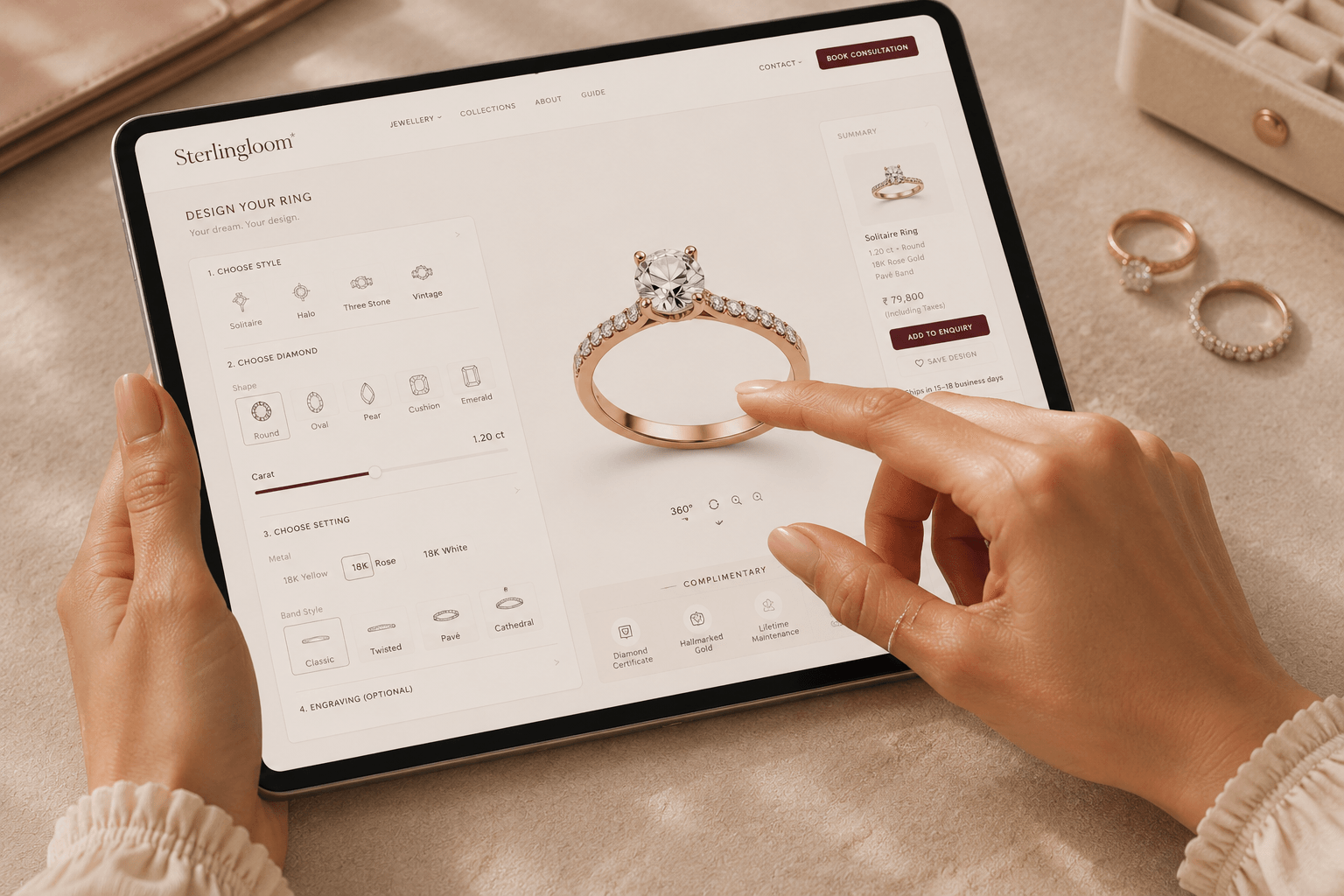
We rebuilt the customiser into a full real-time design builder. As the buyer changes the metal, the stone, the band width, the engraving, the piece updates visually in front of them. They’re no longer making abstract choices and hoping. They’re designing something and watching it take shape.
Underneath, the builder respects the rules of what’s actually possible, so buyers design within what can genuinely be made, without hitting dead ends after they’ve fallen in love with an impossible combination. The result is an experience that feels creative and reassuring at the same time: you get to make it yours, and you get to see exactly what “yours” looks like before you commit.
The result
Letting people see the piece didn’t just make the tool nicer to use. It changed how willing they were to invest themselves in a design, which is the first step toward buying it. Nothing about the underlying jewellery changed. What changed was that the website finally let the buyer experience the one thing customisation is supposed to offer: the feeling of creating something that’s theirs.
What this means for other jewellers
If you offer customisation online, or you’re planning to, the takeaway is direct: let buyers see it. A customiser that collects choices without showing the result is asking people to commit blind, and most won’t.
This matters especially if you’re selling to buyers who want to design: US buyers in particular often prefer creating their own piece over choosing from a curated set. For them, a real, visual, real-time builder isn’t a nice extra. It’s the difference between a customisation feature that converts and one that quietly loses the very buyers it was meant to win. Customisation only works online when the buyer can see what they’re making. Everything else is just a form.
Frequently asked questions
Why do online jewellery customisers often fail to convert?
Because they collect choices without showing the result. When a buyer changes a stone or metal and can’t see the piece update, they can’t picture what they’re creating, and won’t commit to a high-value, personal purchase they can’t visualise. The missing element is real-time visual rendering.
What is a real-time jewellery design builder?
It’s a customisation tool where the piece updates visually as the buyer changes elements like metal, stone, band width, or engraving, so they see what they’re creating as they create it, rather than making abstract selections and imagining the result.
Why is real-time jewellery customisation hard to build?
Partly the rendering, but mainly the rules underneath. Not every design can take every stone or setting, and some combinations aren’t physically possible or available. A real builder has to understand what can actually be made and guide the buyer within that, which is real engineering rather than a simple front-end feature.
How much difference does letting buyers see the design make?
In this case, rebuilding a basic three-step picker into a real-time visual builder lifted engagement 57% in 60 days, with no change to the underlying jewellery. Being able to see the piece is often what turns a hesitant configurer into a committed buyer.
Do customers really want to design their own jewellery?
Many do, especially in certain markets. US buyers in particular often prefer designing their own piece over choosing from a curated selection. For those buyers, a proper real-time design builder can be the difference between a customisation feature that converts and one that loses them.