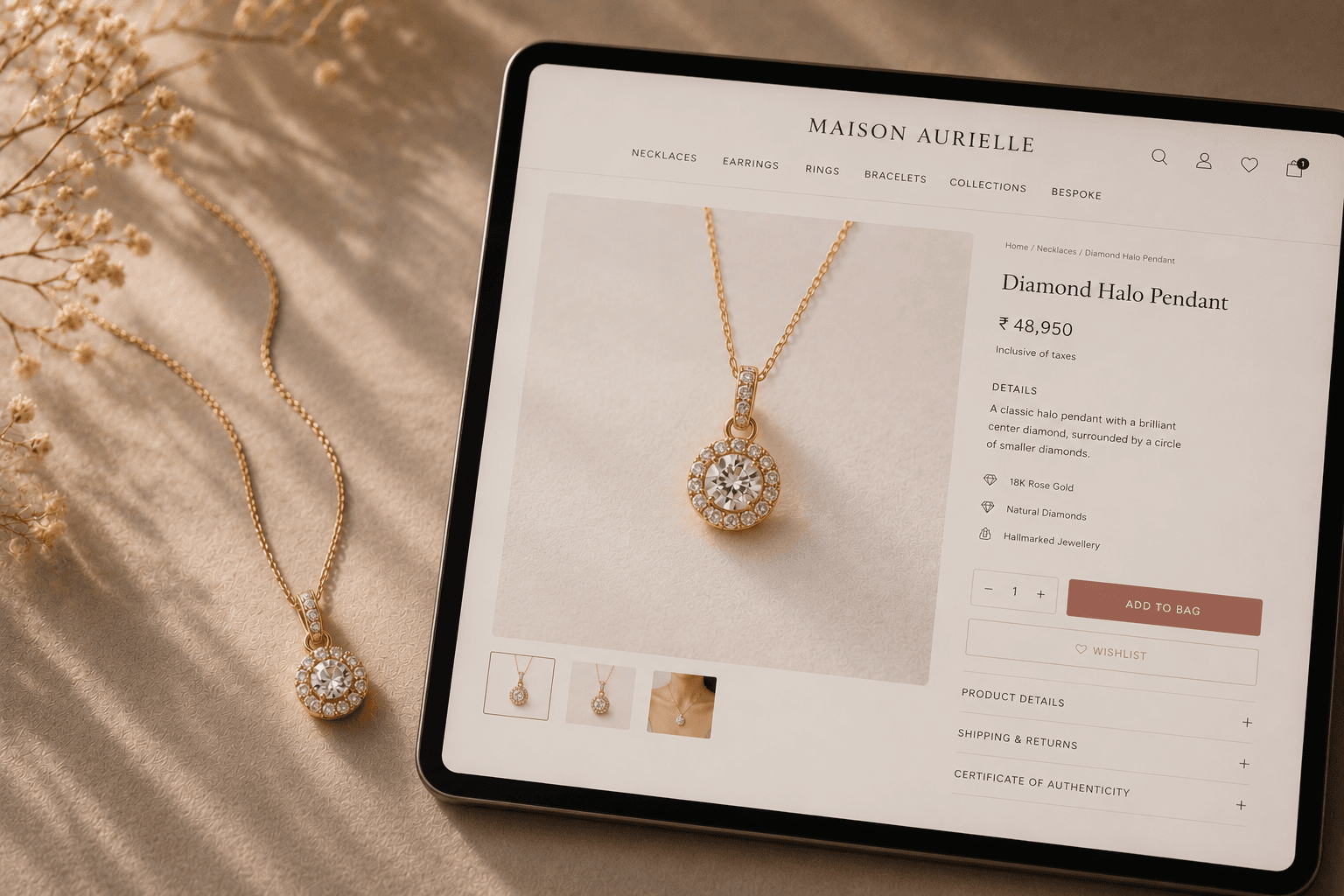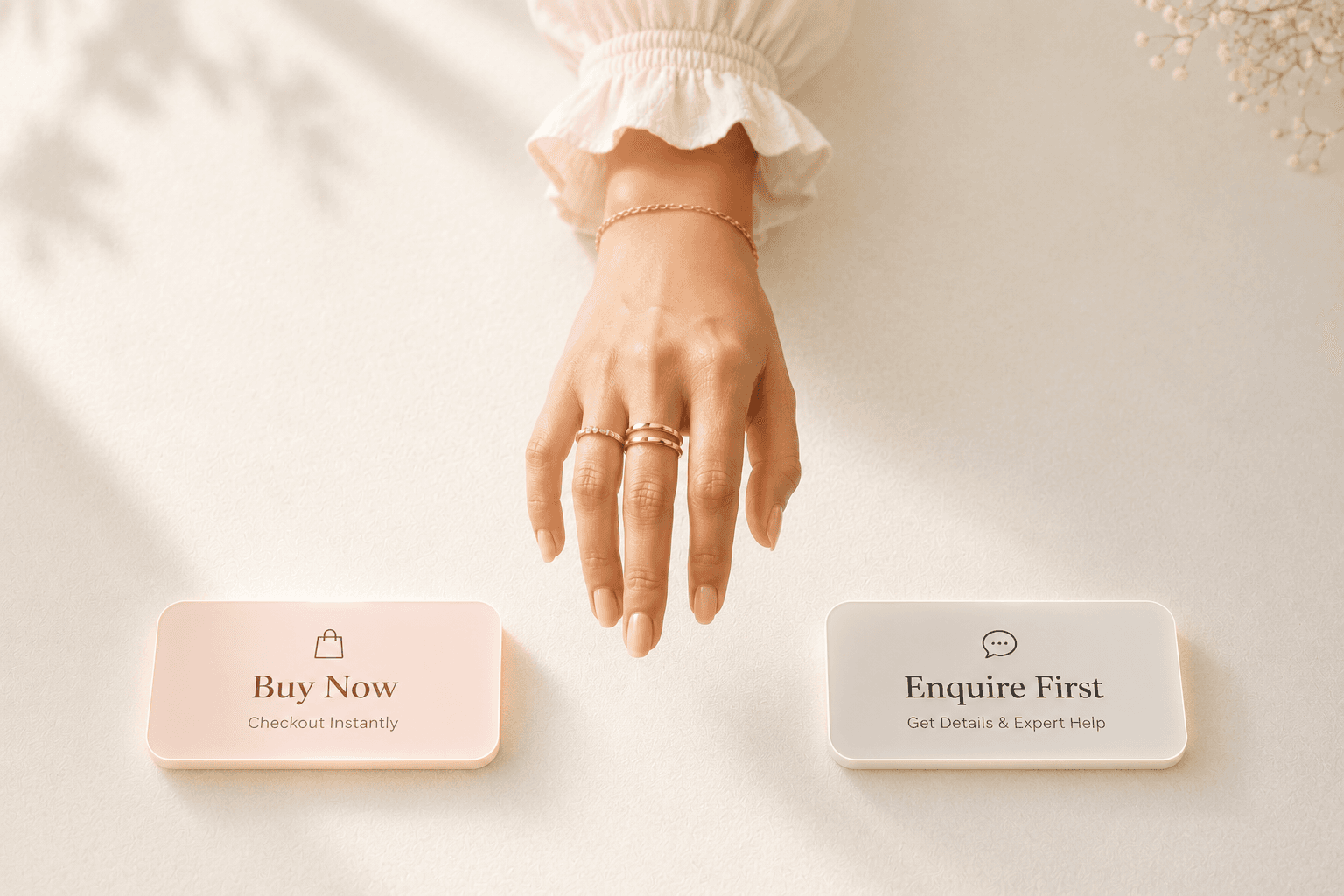
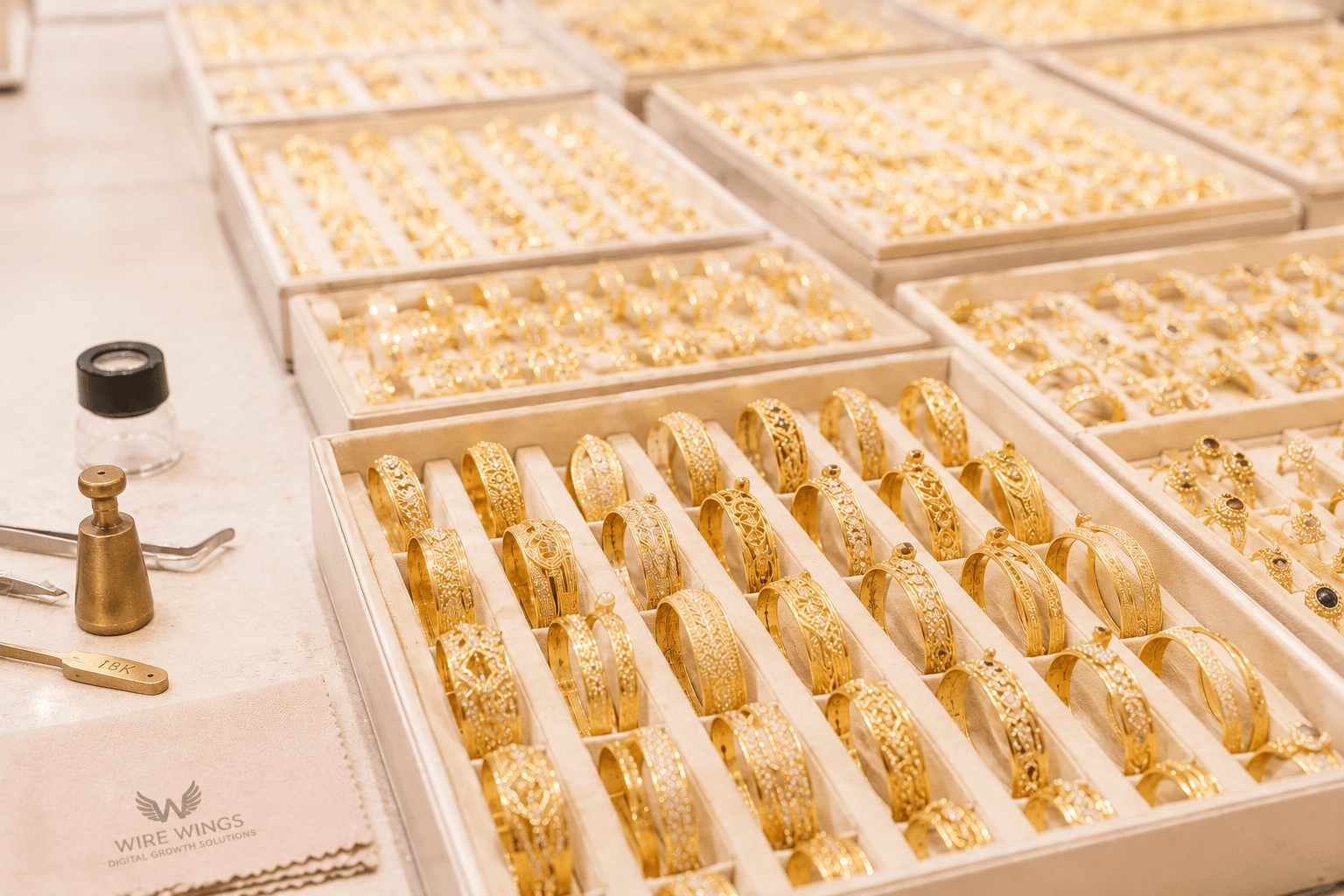
That distinction is the whole story.
B2B jewellery isn’t retail with bigger orders. It’s a fundamentally different business, and it needs a fundamentally different system.
Here’s what this house was dealing with, and what we built.
The problem
On paper, they had a functioning wholesale operation. In practice, the software side was holding it back, because everything available to them was built for the wrong kind of business. They ran six separate inventories. Different buyers needed access to different ones: not everyone could see everything, and some collections were meant only for specific retailers. They needed selective, controlled access, with proper KYC before a buyer could get in. And their pricing wasn’t one price for all; it was tiered and party-specific, different rates for different buyers based on their relationship and volume.
Six inventories. Selective, KYC-gated access. Party-specific pricing.
No off-the-shelf retail platform could handle that. A retail store assumes everyone sees the same catalogue at the same price and checks out the same way. This business was the opposite of that at every turn.
Why a retail website couldn’t do it
Wholesale breaks the retail model in ways that go well beyond pricing. The orders are bulk. The discounts are tiered and negotiated, not a single coupon code. Collections are often exclusive to particular retailers, so access has to be controlled, not open. Payment isn’t always upfront: there’s pay-later, partial payments, and credit relationships that a retail checkout has no concept of.
A retail platform assumes
Everyone is the same buyer
- One catalogue, everyone sees it all
- One price for everyone
- Everyone checks out the same way
- Payment upfront
This wholesale business needs
Every buyer is different
- Six inventories, controlled access
- Tiered, party-specific pricing
- KYC-gated, exclusive collections
- Pay-later, partial payments, credit
Underneath all of that sits the operational reality of a wholesale jewellery business: karigars, order processing, contracts, credit and cash, all of which have to connect to the same system rather than live in separate registers and notebooks. A retail website can’t hold any of that. This is even beyond the usual enquiry-versus-checkout question a retail site answers: wholesale buying runs on controlled access and negotiated pricing, not a public cart or a contact form. The mismatch isn’t a missing feature. It’s the wrong foundation.
What we built
Rather than bend their business to fit a template, we built the system around how they actually work.
- A multi-inventory structure holding all six distinctly
- Selective access with KYC, so each buyer saw only what they should
- Tiered, party-specific pricing applied automatically, not by manual quote
- An operational layer: order processing, credit and payment flexibility, connected in
The guiding principle was simple: build to their business logic, not a template’s idea of how a wholesale business “should” work. They already knew how their business worked. Our job was to give them a system that matched it exactly.
The result
When the system finally fit the business, the business could grow into it. The wholesale operation could serve more buyers, price them correctly, control access cleanly, and run the operational side without the software fighting them at every step. Give a capable business the system it actually needs, and growth is often what was being held back all along.
What this means for other wholesale jewellers
If a meaningful part of your business is wholesale or B2B, and you’re trying to run it on retail tools or manual workarounds, this is the pattern to recognise. The ceiling you’re hitting may not be demand. It may be the system.
Wholesale needs its own build: multi-inventory, controlled access, tiered pricing, and the operational layer connected in. A retail website, however good, isn’t designed for it, and no amount of adjusting will make it one. If wholesale is half your business, half a website won’t do it justice. The businesses that grow are usually the ones whose systems get out of their way.
Frequently asked questions
Why can’t a retail website handle a wholesale jewellery business?
Retail assumes everyone sees the same catalogue at the same price and checks out the same way. Wholesale needs bulk orders, tiered and party-specific pricing, controlled and KYC-gated access, exclusive collections, and pay-later or partial payments, plus operational elements like karigars and credit. A retail platform isn’t built for any of that.
What is a B2B jewellery portal?
It’s a system built for wholesale jewellery, where different buyers get controlled access to specific inventories and their own negotiated pricing, can place bulk orders, and where credit, payment flexibility, and operational processes are built in. It runs the wholesale business, not just a storefront.
How did the Kolkata wholesale house grow 2.8x?
By replacing retail tools and manual workarounds with a system built around their actual business logic: six distinct inventories, KYC-gated selective access, tiered party-specific pricing, and a connected operational layer. Removing that friction let the business grow into a system that finally fit it, and revenue grew 2.8x over 17 months.
What is tiered or party-specific pricing?
It means different buyers automatically see different prices based on their relationship, volume, or agreement, rather than a single price for everyone. In wholesale jewellery this is essential, and it’s something standard retail platforms don’t handle natively.
Do I need a custom system for a wholesale jewellery business?
If your wholesale operation involves multiple inventories, controlled access, negotiated pricing, or credit and operational complexity, then yes: these usually require a system built to your business logic rather than an off-the-shelf retail platform. The mismatch with retail tools is structural, not a missing feature.