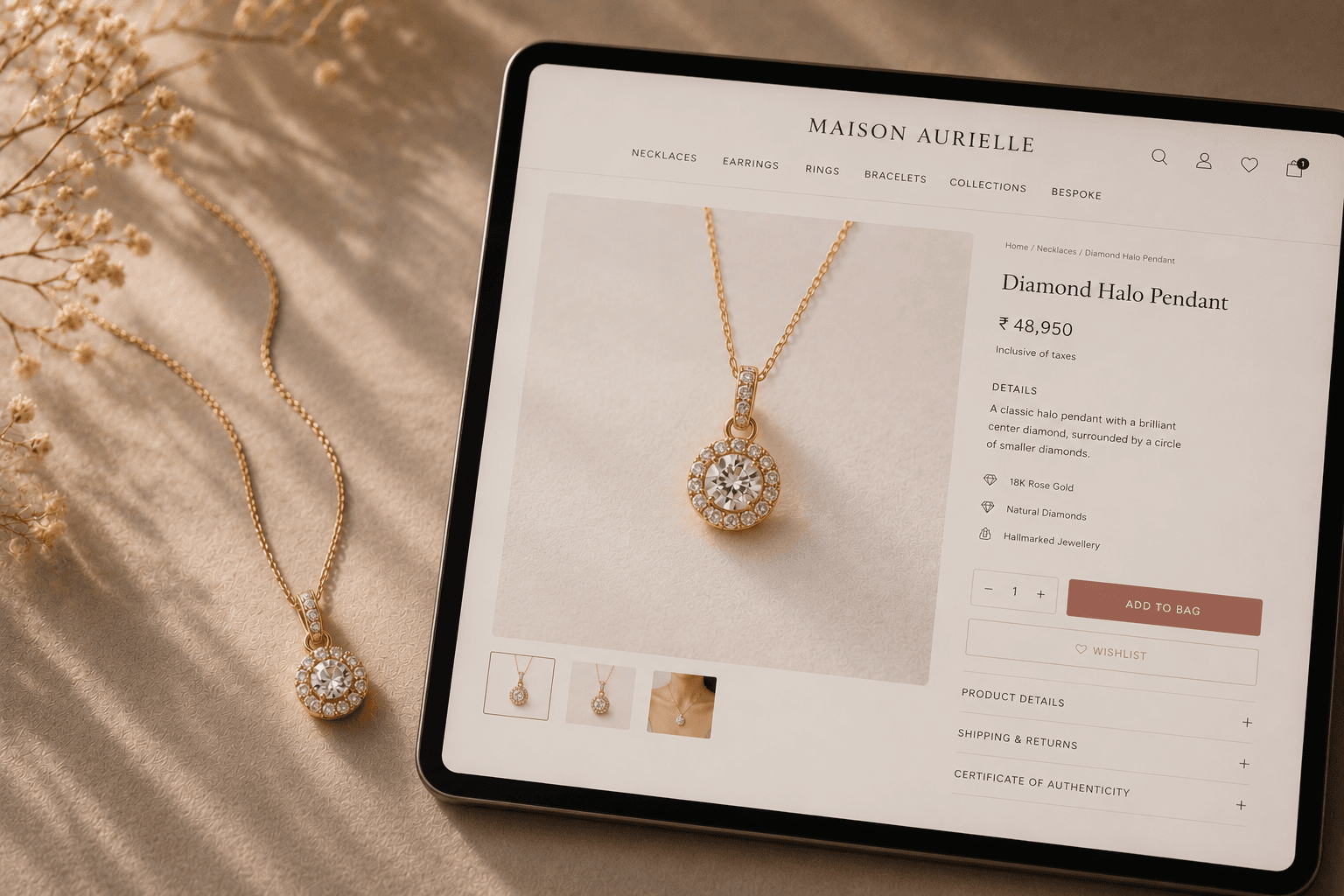
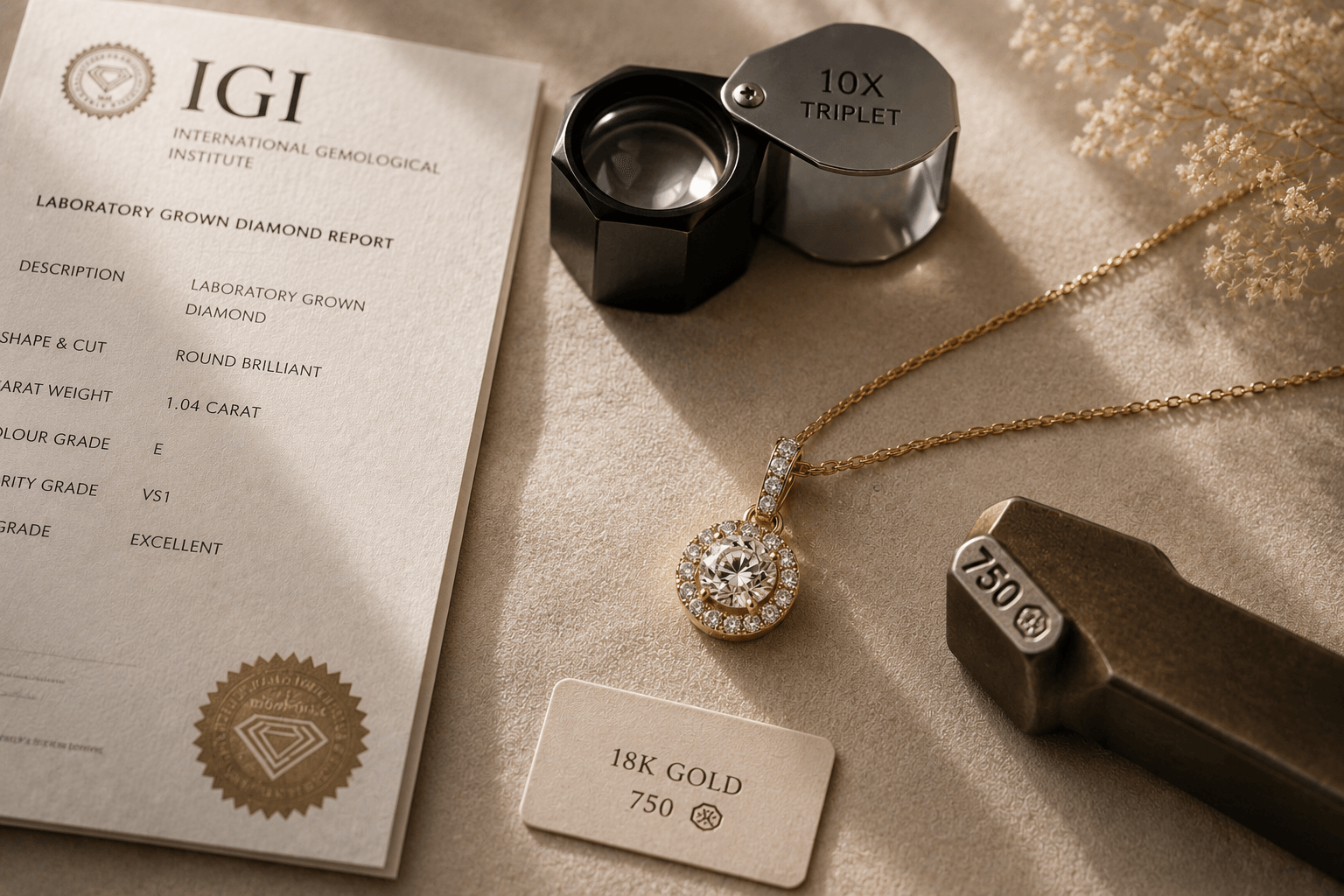
For generations, a jeweller’s word was the guarantee: your family’s name, your reputation in the city, the relationship built over years. That was the assurance a customer needed, and it was enough. For a growing share of buyers, it no longer is. They want proof: certification, hallmarking, transparent pricing, things they can verify. And if you’re not offering it, someone else is.
Personal trust is real, but it no longer travels
Here’s the trap. Your personal trust is genuine and valuable. It’s also invisible beyond the people who already have it. It works beautifully in person, with the customer who’s known your family for twenty years. It means almost nothing to that customer’s daughter researching on her phone, who’s never sat across from you. It means nothing to the NRI buyer considering a large order from another country. It means nothing in the online research phase, where most buying decisions now begin.
Personal trust
Given by people who already know you
- Your word and your reputation
- Built over years, in person
- Works with your existing customers
- Stops at the edge of who knows you
Provable trust
Shown to anyone, anywhere
- Certification on every piece
- Hallmarking made visible
- A transparent price breakup
- Return and buyback policies in writing
So the trust you’ve spent decades building has a boundary you may not have noticed. It stops at the edge of the people who already know you. And the market is increasingly made of people who don’t: the young, the remote, the ones who research before they ever make contact. To all of them, “trust me, I’m your family jeweller” is a claim, not proof.
What buyers expect instead now
The organized brands understood this shift early and built their entire proposition on it. Certification on every piece. Hallmarking made visible. A clear price breakup showing metal, stone, making and tax, so the customer sees exactly what they’re paying for. Return and buyback policies in writing.
That has quietly become the baseline. A generation of buyers has been trained to expect verifiable proof, and once that expectation is set, its absence reads as a red flag. A buyer used to seeing certification and a transparent breakup, who then lands on a jeweller offering neither, doesn’t think “this must be an old-school family jeweller I can trust.” They think “why isn’t this here?” and they leave. It’s not that buyers actively distrust you. It’s that the absence of visible proof now actively costs you, with buyers you never even get to speak to.
Why this is a threat you can’t wait out
First, it compounds. Every young buyer who forms the habit of buying from a brand that gives them proof is a customer, and a future family, drifting out of your orbit while you wait. Trust, once it transfers to someone else, is extremely hard to pull back.
Second, the shops cutting corners are making it worse for everyone. Part of why buyers now demand proof is that some jewellers have been “acting arbitrarily”: claiming purities they don’t deliver, pricing opaquely, prioritising margin over honesty. That behaviour has made an entire generation suspicious by default, which means even honest jewellers are now assumed guilty until they prove otherwise. Fair or not, the burden of proof has shifted onto you. Waiting doesn’t hold your position. It slowly cedes it.
The one advantage the honest jeweller has here
Systematic trust (certification, hallmarking, transparent pricing) is easy for an honest jeweller and impossible for a dishonest one. The shop that’s been quietly under-caratting or pricing opaquely cannot suddenly show clean certification and a transparent breakup, because the proof would expose them. You can. If your purity has always been genuine and your pricing has always been fair, making it all visible costs you nothing and protects you completely.
Visible proof is a moat for the jeweller with nothing to hide. But it only works if you actually raise the wall.
How to make your trust visible
The fix is to pair the personal trust you already have with the systematic trust the new buyer demands, and to put it where they’ll see it.
- Show certification and hallmarking clearly, on every piece, online and in store.
- Make pricing transparent, with a breakup the customer can actually understand.
- Put your return and buyback policies in writing.
- Build a real online presence, so the proof is there before a buyer ever visits.
That last point matters most. Increasingly, the research moment is where trust is won or lost, in seconds, before you get a chance to say a single word, so a real online presence worthy of your name is where the proof has to live.
You spent decades earning trust the hard way. The danger now isn’t that you’ve lost it. It’s that you’re keeping it invisible to exactly the buyers deciding whether to give it to you. In this market, trust you can’t prove is trust you’ll slowly lose.
Frequently asked questions
Why is personal trust no longer enough in the jewellery business?
Because trust is shifting from personal to provable. A jeweller’s word still works with customers who know them personally, but younger buyers, remote buyers, and NRI buyers who research online before making contact expect verifiable proof (certification, hallmarking, transparent pricing) instead of relying on reputation they can’t see.
What trust signals do jewellery buyers expect now?
Clear certification on pieces, visible hallmarking, a transparent price breakup showing metal, stone, making and tax, and written return or buyback policies. Organized brands made these the baseline, so their absence now reads as a warning sign to many buyers.
Is certification and transparency really that important for a traditional jeweller?
Increasingly, yes. Buyers trained to expect visible proof treat its absence as a red flag, often leaving without asking a single question. For honest jewellers this is actually an advantage, because genuine certification and transparent pricing are easy for them and impossible for shops cutting corners.
Where is jewellery trust won or lost today?
Increasingly online, during the research phase, before a buyer ever contacts or visits. Much of a buyer’s decision about whether to trust a jeweller is formed on their website and online presence, often in seconds, which is why visible proof there matters so much.
How can an honest jeweller stand out in a market full of distrust?
By making their honesty visible. Genuine certification, hallmarking, and transparent pricing are things only an honest jeweller can show freely, so putting them front and centre, online and in store, both builds trust with new buyers and separates the jeweller from shops that can’t afford that transparency.