That’s a painful thing to hear when your name has meant something in your city for decades. But it’s also good news, because the reason you’re losing them is fixable, and you’re holding an advantage those brands spent enormous sums trying to buy.
It’s not that they trust you less. It’s that they can’t find you.
The younger buyer hasn’t decided your jewellery is worse. They often don’t know your jewellery at all, because their entire discovery process happens on a phone. They see something on Instagram, they search, they compare on websites, they read about certification and pricing, and they form an opinion, all before they’d ever think to visit a store. By the time they’re ready to buy, they’ve been shopping for weeks in a place you’re not present.
A family jeweller with no real online presence simply isn’t in that process. You’re not losing the comparison. You’re not in it. The young buyer isn’t rejecting you; they never encountered you. That’s the gap. And it’s a gap of visibility and experience, not of trust or craft.
What CaratLane, BlueStone and GIVA actually got right
These brands didn’t win by making better jewellery than a good traditional jeweller. Plenty of family jewellers make pieces every bit as fine. What they won on was the experience of buying. They met the young customer on the phone, with clean websites, clear pricing, visible certification, design-forward everyday pieces, and a buying journey that felt easy and modern.
GIVA built a brand on the idea that young Indians wanted a jewellery experience they could trust and relate to, in a segment full of shops “acting arbitrarily” on purity and price. BlueStone leaned on try-at-home and fast design cycles. CaratLane made buying diamonds online feel normal. None of that is about the metal. It’s about meeting the buyer where they are, in a way that feels made for them. That’s what you’re actually up against. Not better jewellery. A better-matched experience.
What you have that they spent crores trying to buy
The single hardest thing for a new jewellery brand to build is trust. It takes decades, and it can’t be bought with marketing. CaratLane understood this so clearly that it did the one thing that could shortcut it: it brought in Titan, the house behind Tanishq, specifically for the trust and the name. The founder reportedly argued that a few hundred crores wouldn’t cut it: the business needed the credibility that only an established, trusted jewellery name could provide.
What the online brands had to build
CaratLane, BlueStone, GIVA
- Visibility where young buyers look
- A modern, easy buying experience
- Design-forward everyday pieces
- Clear pricing and certification
What you already have
Earned over decades, not bought
- Genuine, decades-earned trust
- Heritage and a name that means something
- Real relationships across generations
- A physical presence people can walk into
You have the thing they had to spend a fortune to borrow. The only problem is that none of it is visible where the next generation is looking.
You’re not behind because you lack what they have. You’re behind because you’re not showing what you have, online, where it now counts.
Why the next generation matters more than one sale
It’s tempting to shrug this off: the parents still come in, business is fine. But the children aren’t just a few missed daily-wear sales. They’re the future of the entire relationship.
Lose them at stage one, and you lose the whole journey your family may have held for generations.
The young buyer who buys their first pieces from an online brand today is the one who’ll buy their engagement ring, their wedding set, their children’s first gold from whoever earned them early. Lose them at the daily-wear stage and you’re not losing a ₹15,000 sale. You’re losing decades of a family relationship. And there’s a second reason they matter: they’re often the ones who bring the whole family online. Win them, and you frequently win the household.
How to actually win them back
The fix isn’t to become CaratLane. It’s to show up as you, with your real trust and heritage, where the next generation actually looks. That starts with a serious, well-built website.
Be present online, worthy of your name
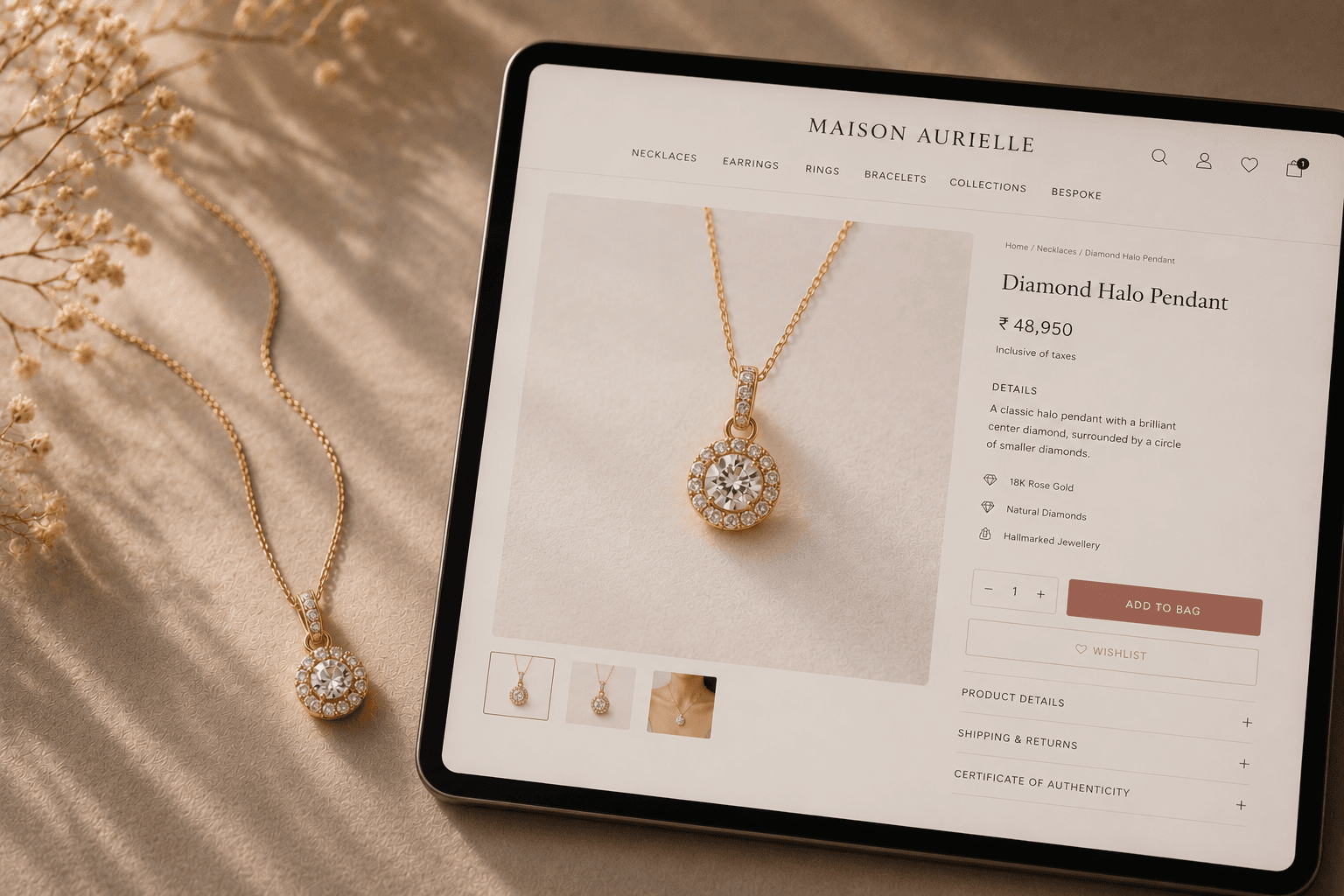
A serious digital presence, so that when a young buyer researches, you’re in the process, not invisible. Not a cheap placeholder that undercuts the trust you’ve built, but something that reflects the quality of your house.
Lead with what this generation buys
Design-forward, studded, lighter, everyday pieces, shown well, with clear pricing and visible certification. Make the trust you’ve earned in person visible on screen.
Make it easy
The experience that won this generation over was an easy, modern one. Meet them there, with the credibility you already have that the online-only brands had to buy.
You don’t need to out-market the online brands. You need to stop hiding the biggest advantage in the market from the people who’d value it most. (And here’s roughly what a build like this costs.)
Frequently asked questions
Why are younger buyers choosing CaratLane and BlueStone over traditional jewellers?
Mostly because those brands meet them where they discover and research: online. It’s rarely about better jewellery or more trust; it’s that younger buyers form their opinions on a phone before ever visiting a store, and a jeweller with no real online presence isn’t part of that process.
Do traditional jewellers have any advantage over online jewellery brands?
A significant one: genuine, decades-earned trust and heritage. New online brands find trust the hardest thing to build: CaratLane brought in Titan (the house behind Tanishq) specifically for that credibility. An established jeweller already has what those brands had to spend heavily to acquire.
How can a family jeweller compete with online jewellery brands?
By becoming visible online in a way that reflects their real quality and trust: a serious website and digital presence, design-forward and lighter pieces shown well, clear pricing and certification, and an easy buying experience. The goal isn’t to imitate online brands, but to show earned trust where the next generation looks.
Why does winning younger jewellery buyers matter so much?
Because they represent the future of the whole family relationship. A buyer who starts with an online brand for everyday pieces often stays with them for weddings and major purchases too. Younger buyers are also usually the ones who bring the whole family’s buying online.
Is it worth investing in digital when most of my sales still come in-store?
Yes, because increasingly the in-store sale is decided online first. Younger buyers research digitally even when they buy in person, so being invisible online means losing sales you never see, including from the next generation of your existing customers.